AI

System 1 vs LLM: Does Every AI Decision Really Need a Large Language Model?
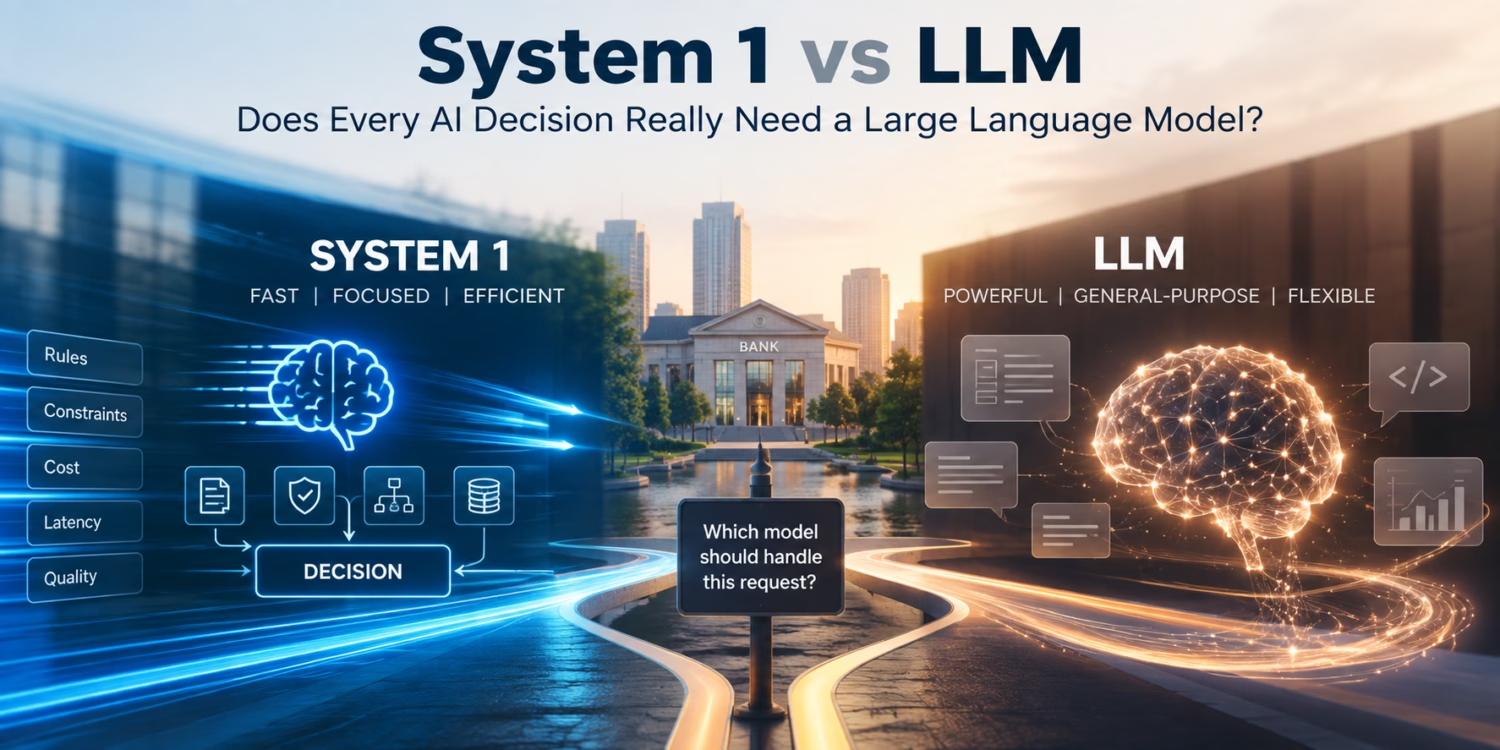
Does every AI decision need the power of a general-purpose LLM? We tested Jev 1.13 as a System 1 decision model against an OpenAI LLM for a banking model-routing problem. The experiment revealed substantially lower observed latency and routing API cost — and raised a bigger question about how enterprises should match the right level of intelligence to each AI decision.

System 1 vs LLM: Does Every AI Decision Really Need a Large Language Model? Read More »
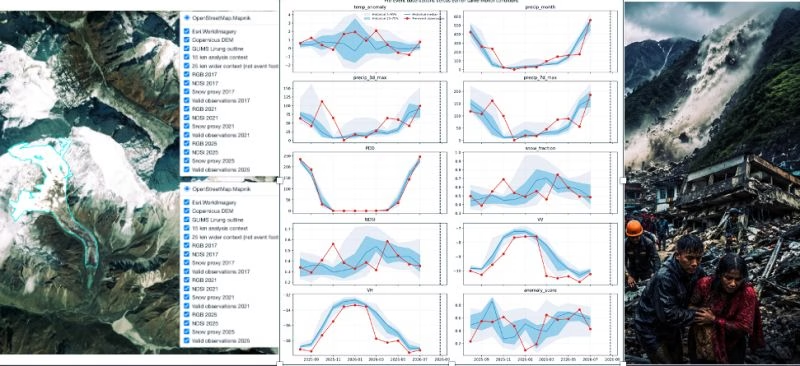
Build an AI-Powered Glacier Monitoring System: What Satellites Revealed Before the 2026 Langtang Lirung Collapse

Can AI see a glacier disaster coming?

Satellite and climate observations before the 2026 Langtang Lirung event revealed exceptionally warm, melt-favourable conditions—but an unsupervised AI model did not find a unique monthly warning signal.

That “negative” result teaches one of the most important lessons in applied AI:

Anomaly detection is not prediction.

Build an AI-Powered Glacier Monitoring System: What Satellites Revealed Before the 2026 Langtang Lirung Collapse Read More »

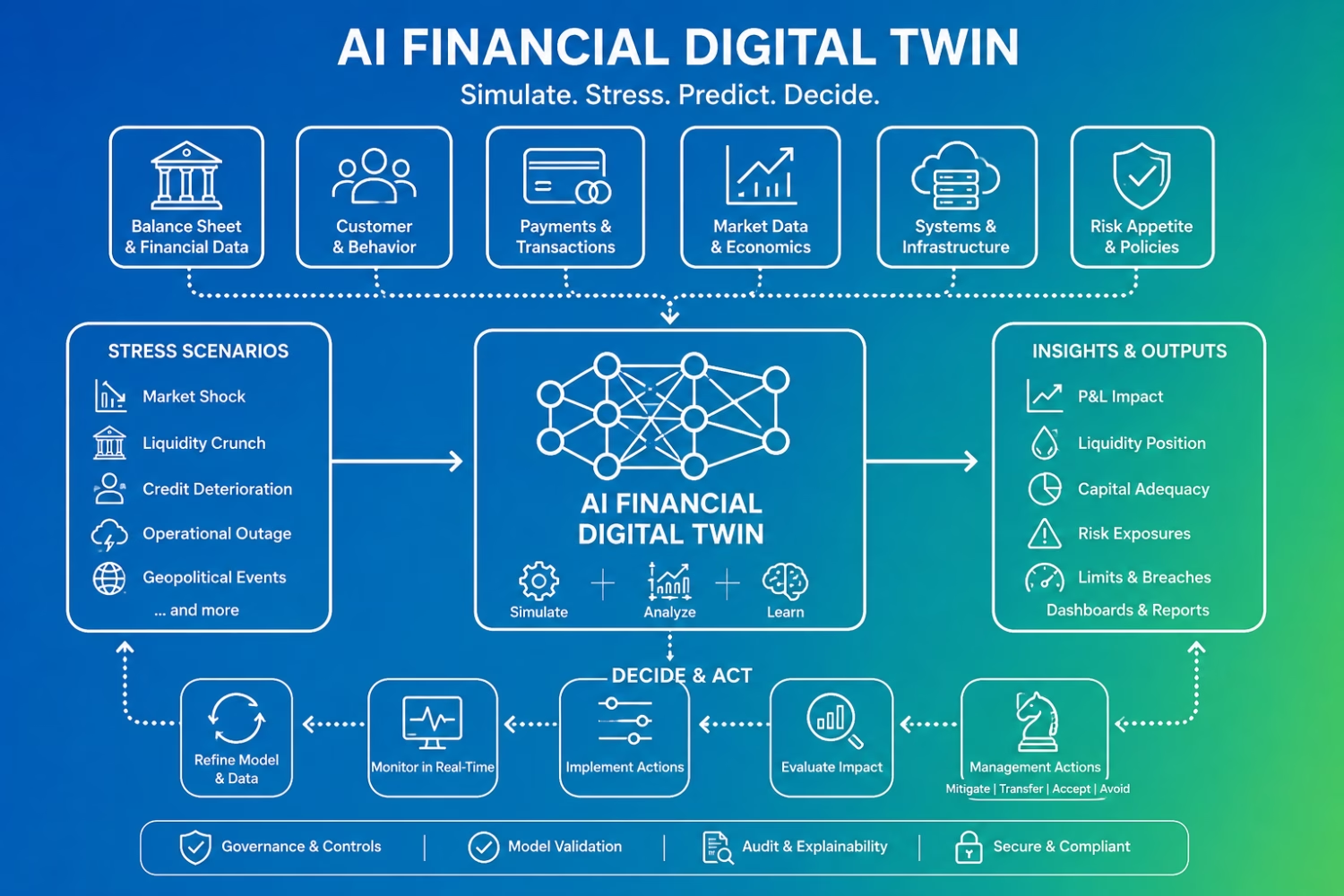
Build an AI-Powered Financial Digital Twin: Simulate a $100 Billion Bank with Python

What happens when a bank’s cloud region fails?

It may not remain an IT problem.

Cloud failure → payment disruption → customer impact → deposit withdrawals → liquidity stress.

I explored how Python, NetworkX, SimPy, Monte Carlo simulation, financial models, and an LLM can work together to build a Financial Digital Twin of a synthetic $100B bank.

The most interesting lesson? The LLM doesn’t calculate the financial results. Python does. The LLM explains validated results to humans.

That’s a much more interesting enterprise AI architecture than simply putting a chatbot on top of financial data.

Build an AI-Powered Financial Digital Twin: Simulate a $100 Billion Bank with Python Read More »

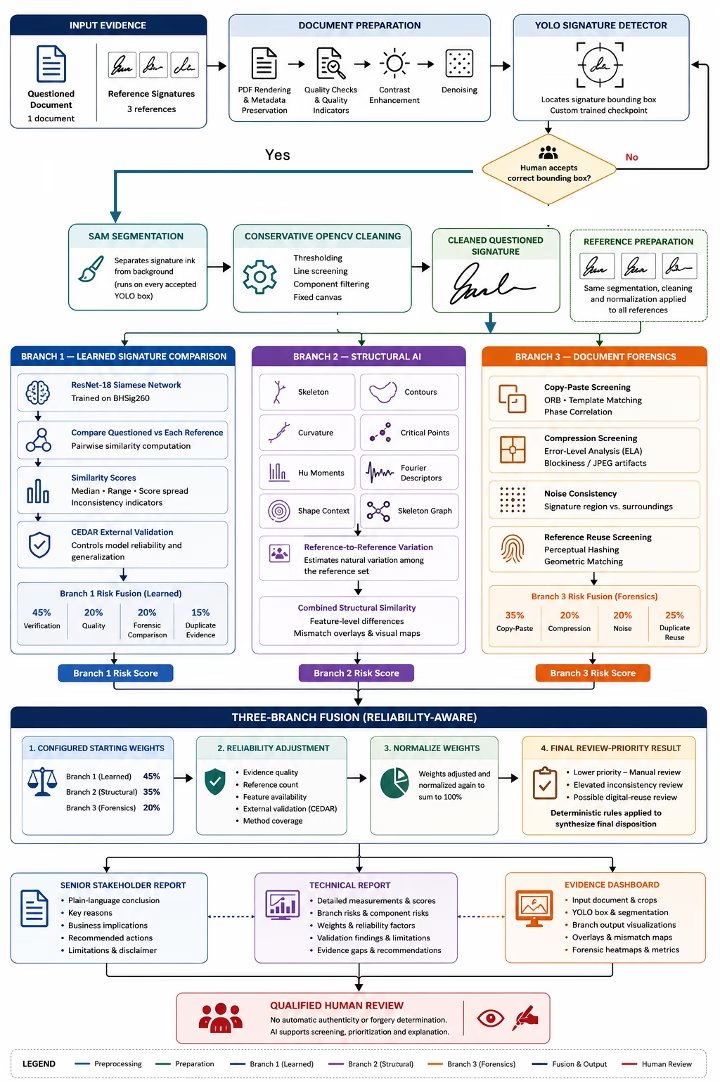
Build an AI Signature Verification and Fraud Detection System

What if a signature matches perfectly because a fraudster copied the genuine signature?

That’s why signature verification needs more than one neural network.

This project combines:

YOLO detection → Siamese embeddings → structural analysis → document forensics → evidence fusion → explainable reports.

It’s a great example of how real AI systems move beyond model.predict().

Build an AI Signature Verification and Fraud Detection System Read More »

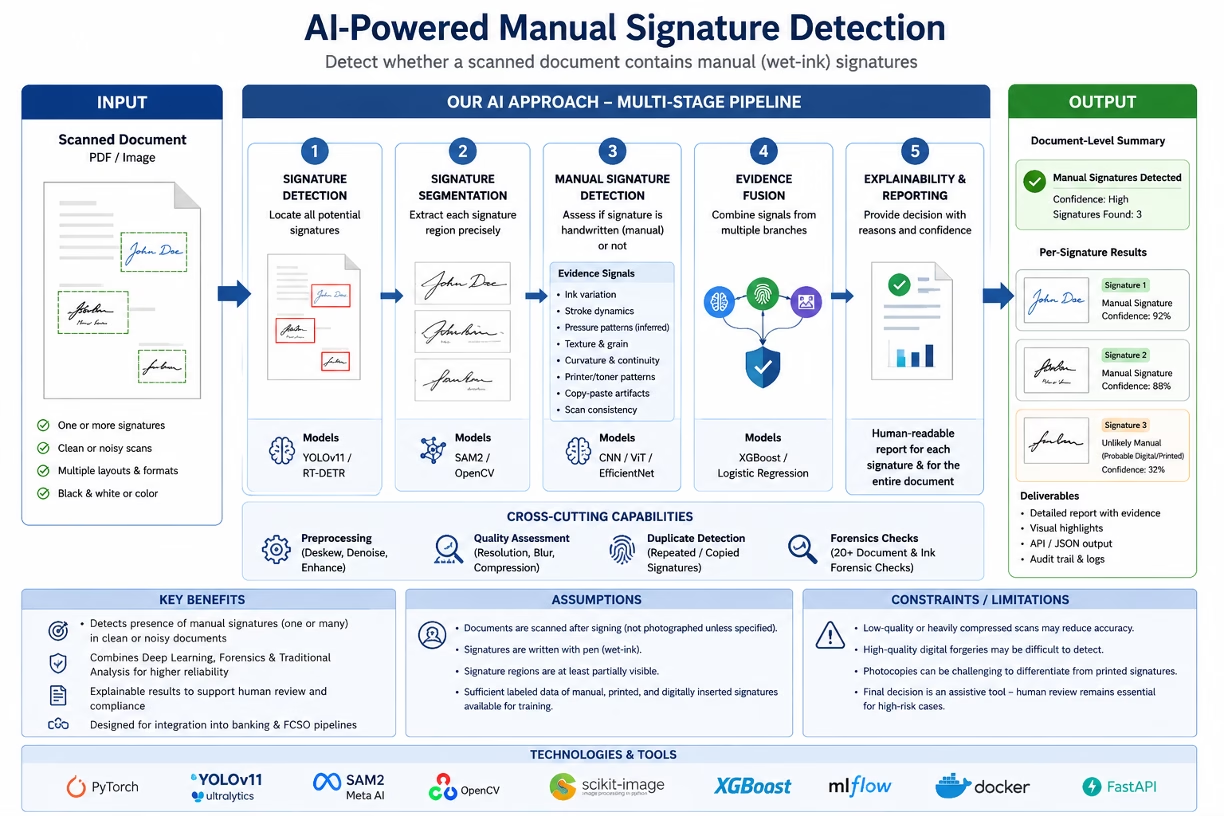
AI Signature Extraction and Manual-Signing Indicator Analysis

Can AI tell whether a document contains a handwritten signature?

Finding the signature is only the beginning.

In this project, we combine YOLO, Segment Anything, OpenCV, feature extraction, quality gates, and human review to build an AI-assisted signature analysis pipeline.

Along the way, you’ll learn one of the most important lessons in applied AI:

a model should never claim more than its input can prove.

AI Signature Extraction and Manual-Signing Indicator Analysis Read More »

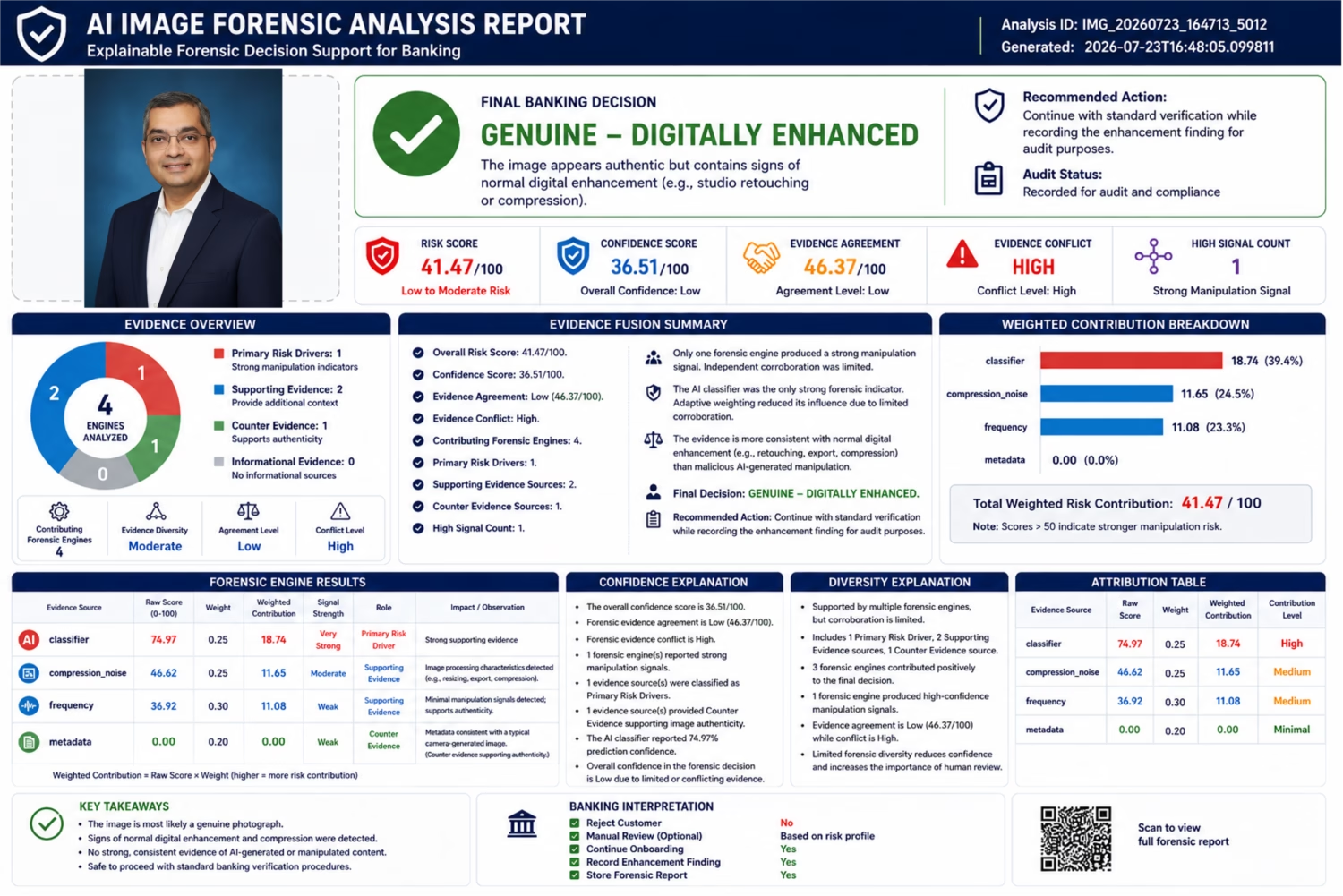
Build an AI Deepfake Image Detection System: A Beginner’s Guide to Multi-Evidence Digital Forensics

Learn how to build an AI-powered deepfake image detection system that combines computer vision, image forensics, metadata analysis, and explainable AI to detect manipulated images with confidence.

Build an AI Deepfake Image Detection System: A Beginner’s Guide to Multi-Evidence Digital Forensics Read More »

Build an AI-Powered Market Risk Control Cockpit with Python and Generative AI

Banks process enormous volumes of market data every day—but one stale or incorrect price can affect valuations, P&L, risk metrics, and regulatory reporting.

In this hands-on Python project, we build an AI-powered Market Risk Control Cockpit that combines deterministic rules, Isolation Forest, portfolio exposure, scenario analysis, Streamlit, and generative AI.

The goal is not to replace market-risk analysts.

It is to help them find the alerts that matter.

Build an AI-Powered Market Risk Control Cockpit with Python and Generative AI Read More »

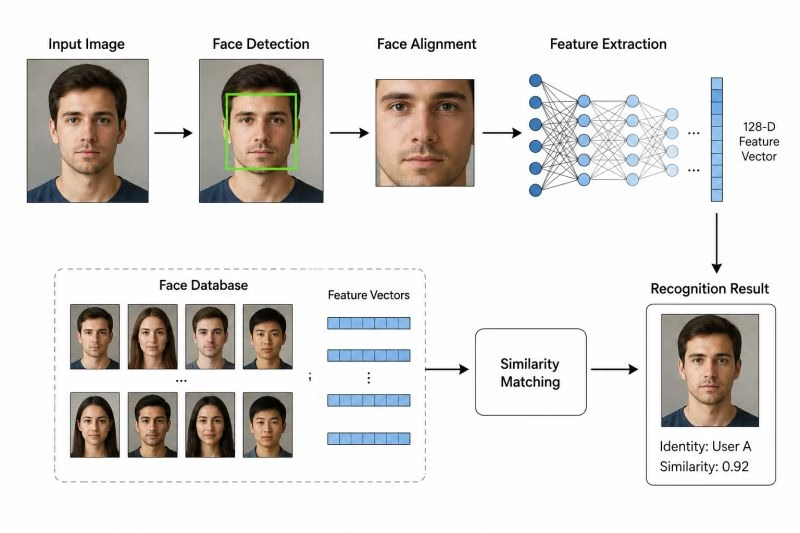
Build a Face Recognition System with Python and InsightFace

Can AI tell whether two photos belong to the same person?

In this week’s hands-on AI project, you’ll build a complete face recognition system using Python and InsightFace. Learn how AI detects faces, generates facial embeddings, compares identities, and ranks the closest matches—all while understanding the concepts behind the code. Perfect for beginners looking to build a real-world computer vision project.

Build a Face Recognition System with Python and InsightFace Read More »

From Simulation to Prediction: Learning Fluid Dynamics with AI

Can an AI predict how fluid moves?

In this piece, I explore how a physics foundation model—WALRUS—learns to forecast the evolution of a heated fluid system. Instead of solving equations, the model observes patterns and generates its own version of the future. The result is a striking simulation that reveals both the power and the limits of AI in modeling the physical world.

From Simulation to Prediction: Learning Fluid Dynamics with AI Read More »

AI-Assisted Protein Analysis: From Sequence to Drug-Binding Hypothesis

Can AI help us understand how medicines interact with the body?
In this edition, I explore a beginner-friendly experiment where I used AI tools like AlphaFold and AutoDock Vina to go from a protein sequence to a plausible drug-binding hypothesis—all on a laptop. A simple walkthrough, even if you’re new to biology.

AI-Assisted Protein Analysis: From Sequence to Drug-Binding Hypothesis Read More »

Scroll to Top